
2026
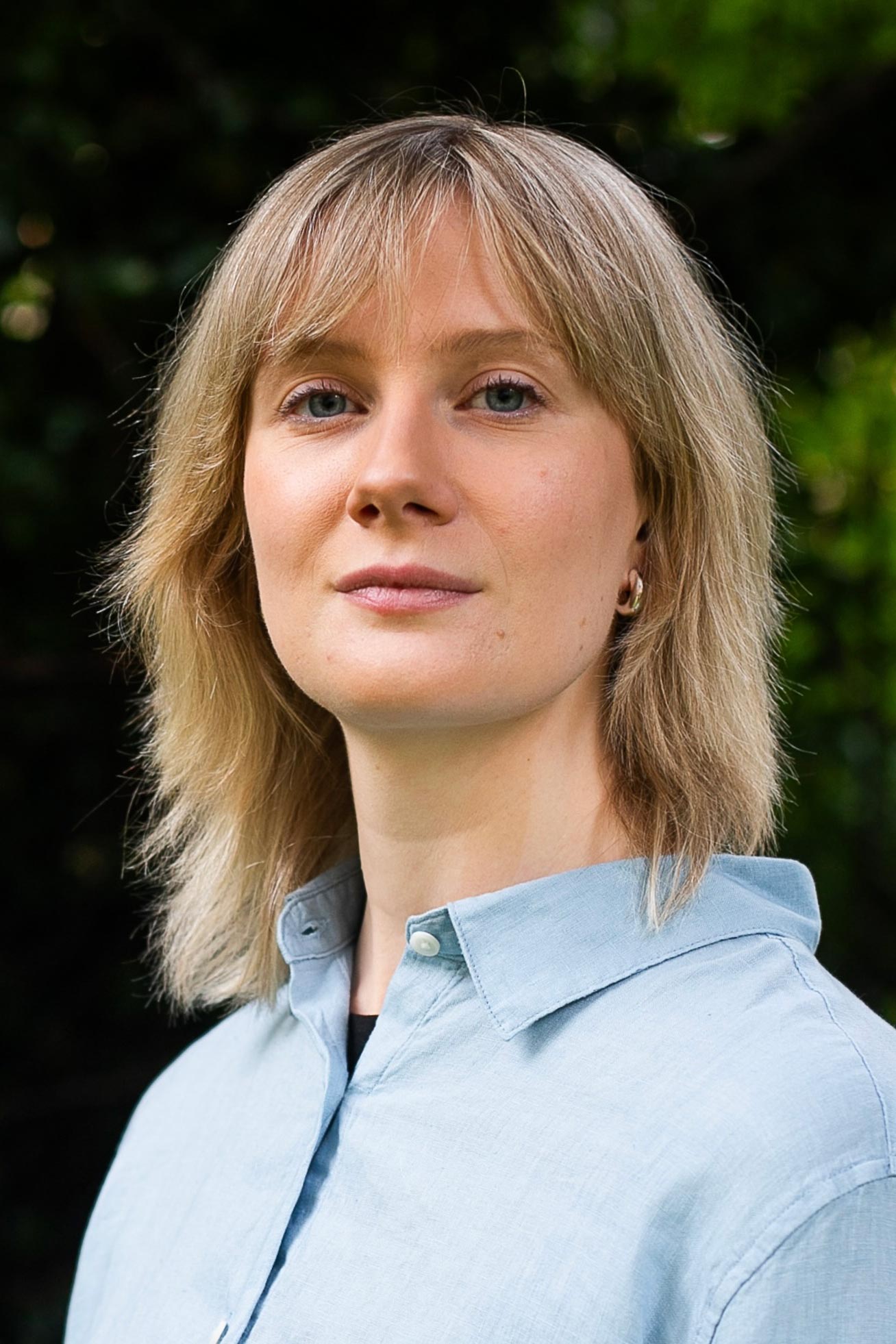
LUCY BYFORD
Alexander von Humboldt Stiftung Postdoctoral Fellow, Constructor University Bremen
Marionette Morphologies: Abstraction and Performance Contexts in the Dada Puppetry and Doll-making of Sophie Taeuber-Arp, Emmy Hennings, and Hannah Höch
In 1916, both Emmy Hennings and Hannah Höch independently created designs for a series of dolls, whose non-naturalistic forms anticipated the extraordinary puppet designs created two years later by Sophie Taeuber-Arp for a production of Carlo Gozzi’s König Hirsch fable, staged at the Swiss Marionette Theatre. Photographic reproductions of these works were quickly circulated in avant-garde magazines: dolls by Hennings appeared in Cabaret Voltaire’s singular June 1916 issue; one of Taeuber-Arp’s marionette designs featured in the sole November 1919 issue of Der Zeltweg; and Höch’s Puppen graced the cover of issue 5 of Schall und Rauch in April 1920. Yet when Taeuber-Arp designed her marionettes, she was responding first and foremost to a commission by the founder of the marionette theatre, Alfred Altherr, who sought to fuse Werkbund design ideals with the dematerialised performance theories of Edward Gordon Craig. Upon closer examination, doll and puppet designs by women Dadaists were frequently subsumed within the Dada canon, despite the fact that they originated largely from the artists’ design work or proto-Dada activities. This project subsequently explores the subversive capacity for doll and puppet creation by Dada’s women artists, positing that the media of dollmaking and puppetry are uniquely positioned to question distinctions between Kunstgewerbe (applied arts) and avant-garde art.
While they are frequently grouped together, doll and puppet designs by Taeuber-Arp, Hennings, and Höch have yet to be critically situated within the wider frameworks of avant-garde responses to the potent symbol of the marionette and the traditions and discourses surrounding early twentieth-century puppetry. Despite significant avant-garde precedents, such as Alfred Jarry’s marionette play Ubu Roi, first performed in Paris in 1896, puppets and dolls are typically marginalised in art-historical analyses due to connotations with lowbrow, ephemeral, and feminised creative production. The proposed project thus aims to present the first in-depth consideration of the roughly contemporary puppet and doll-making practices of three leading female Dadaists. Three sculptural series will serve as core case studies: Taeuber-Arp’s König Hirsch marionettes from 1918, Höch’s Puppen, 1916, and dolls and a hand-puppet created by Hennings between 1916 and 1917. These case studies are distinct from the satirical physiognomies and grotesque exaggerations seen in puppet designs by the artists’ male peers George Grosz, John Heartfield, and Otto Griebel, illustrating the preference shared by Taeuber-Arp, Hennings, and Höch for otherworldly corporeal abstraction. In response to these formal characteristics, the project ‘Marionette Morphologies’ investigates how craft-adjacent concerns informing the materiality, display, and performed animation of these artworks are not mutually exclusive to but intersect with the metaphysical and symbolic resonances of puppetry.

BIANCALUCIA MAGLIONE
Research Fellow, University for Foreigners of Siena
Hans Arp’s Engagement with the Neo-Mediterranean Aesthetic
This research project investigates Hans Arp’s engagement with the neo-Mediterranean aesthetic discourse in the postwar period, focusing on the 1950s and 1960s as a moment in which the Mediterranean was reconceptualized as a critical cultural and ideological category. While the historical avant-gardes fascination with the Mediterranean has been extensively studied—primarily through biographical, mythological, or formal lenses—less attention has been paid to the postwar revival of Mediterranean discourse as a response to the crisis of European identity following World War II and the decline of colonial paradigms. In this period, the Mediterranean increasingly functioned not as a timeless source of form, but as a fluid system of interactions among cultures and societies that was shaped by historical, political, and economic entanglements. It emerged as a space of encounter and tension, foregrounding issues of hybridity, displacement, and Europe’s reconfigured relationship with its southern and eastern margins. In Italy, this reconceptualization was supported by cultural and institutional initiatives—particularly in Sicily—aimed at repositioning the Mediterranean as a central arena of postwar cultural exchange.
The point of departure for this study is the Manifesto of Neo-Mediterraneism— Plastic Arts (1959), drafted by the Italian poet and art critic Carlo Belloli in Erice, Sicily, and signed by figures including Hans Arp, Le Corbusier, and Carola Giedion-Welcker. The manifesto promoted an aesthetic grounded in organic form, materiality, and sensory experience, explicitly opposing what it identified as a rationalist “Nordic” approach to art. Belloli’s Neo-Mediterranean project emerged in close proximity to institutions such as the Accademia del Mediterraneo and the Centro per la Cooperazione Mediterranea, which in Italy had played an essential role in shaping narratives around Mediterranean centrality since the early 1950s—though not without specific political ambitions. The central aim of this project is to determine whether and how Arp actively engaged with the Neo-Mediterranean discourse, and to reassess his late sculptural production within this framework. It asks whether Arp’s works of the 1940s and 1950s—often described as Mediterranean sculptures or groups—should be understood beyond their interpretation as universal or timeless forms, as conscious contributions to a historically situated, anti-rationalist aesthetic position.
Methodologically, the research combines archival investigation, formal analysis of artworks, and contextual interpretation. The one-month fellowship at the Stiftung Arp e. V. will provide access to essential primary materials, such as correspondence, unpublished writings, and documentation related to Arp’s postwar networks and activities. Particular attention will be given to Arp’s relationship with Carola Giedion-Welcker—whose 1957 essay on Arp explicitly addressed the Mediterranean dimension of his work and whose co-signature of the manifesto suggests a shared critical horizon—as well as other key figures. These findings will be cross-referenced with a close analysis of selected sculptures, focusing on form, materiality, surface treatment, and terminology in relation to contemporary debates. By situating Hans Arp within a transnational network of artists, critics, and institutions, this project aims to offer a historically grounded reassessment of his postwar work and to contribute to a broader understanding of Neo-Mediterranean aesthetics as a key phenomenon in postwar European art.

ROULA MATAR
Associate Professor, Ecole nationale supérieure d’architecture de Versailles
Hans Arp and the Construction of the Discourse on the “Synthesis of the Arts,” 1946–1949
In a letter of January 23, 1948, Alfred H. Barr Jr., then the director of collections at the Museum of Modern Art (MoMA), wrote to the architectural historian Henry-Russell Hitchcock, “It seems to me you underestimate both the possible and actual influence of Miro and especially Arp on architecture.” Barr made this remark after reading Hitchcock’s manuscript for Painting Toward Architecture, which was on the collection of the Miller Company, a commercial lighting manufacturer based in Meriden, Connecticut. Assembled by Emily Hall Tremaine and her husband Burton G. Tremaine, this collection was intended to educate and inspire within their company, to show that abstract art had already had a historical influence on modern architecture, and that these contemporary works had much to offer to architects. Hitchcock’s book was published to coincide with the traveling exhibition of the Tremaine collection, which toured twenty-eight venues across United States between 1947 and 1952.
From February 15 to April 3, 1949, MoMA presented From Le Corbusier to Oscar Niemeyer: 1929–1949, an exhibition based on Hitchcock’s book and aimed at showing the two major trends in twentieth-century architecture. Visitors could see the model of Villa Savoye (1929–1931) juxtaposed with Oscar Niemeyer’s 1948 design for the Tremaine House, surrounded by a garden designed by landscape architect Roberto Burle-Marx. More specifically, the Tremaine house in California, with its rectangular prism set on stilts above a garden with organic shapes to which it responded, represented the “architectural synthesis of these two important twentieth-century stylistic trends: the formalistic geometry of Le Corbusier and the free form anthropomorphic shapes of Arp.”
The narrative proposed by the exhibition at MoMA recreated these two important trends. On the one hand, it combined the Purism of a Corbusian canvas with the model of the Villa Savoye. The display represented the second trend, with its organic free forms, by hanging a wooden relief by Hans Arp from 1938–1939 and a gouache of a garden project in Rio de Janeiro, designed in 1948 by Burle Marx, on the same wall. This project takes up Barr’s insightful remark to Hitchcock as key to the construction of this narrative. His association between Arp and architecture has been neglected in the historiography of modern architecture, even though it responded to Arp’s increasing engagement with architecture between1946 and 1949. In collaboration with Sigfried Giedion, then president of the Congrès Internationaux d’Architecture Moderne (International Congresses of Modern Architecture or CIAM), he formulated a “questionnaire on synthesis of architecture, painting and sculpture,” which was submitted to the members at the congress in Bridgewater in 1947, and again at the congress in Bergamo in 1949.
This project aims to clarify Arp’s influence on architecture before his well-known collaborations with architects that began in 1950 (Harkness Commons at the Graduate Center of Harvard University, the University city in Caracas, and UNESCO in Paris), from two angles. First, it explores the archives to understand the dialogue between Arp and Giedion, to shed light on Arp’s overlooked role within the CIAM. Second, it aims to study the genesis of the association between Arp and architecture that MoMA highlighted at the 1949 exhibition.

SPYROS PETRITAKIS
Adjunct Assistant Professor, Department of Art Theory and History, Athens School of Fine Arts, Athens, Greece
Visual Pythagorisms: Abstraction, Vagrant Religiosity and Greek Imagery in Hans Arp’s Postwar Oeuvre
This project investigates Hans Arp’s postwar artistic production within the context of transnational and interreligious entanglements of artistic, intellectual, and esoteric communities, with a particular focus on Greece. It argues that his work found resonance within a milieu shaped by shared counter-modern concerns and the reappropriation of Pythagorean cosmological concepts.
It is well established that a profound spiritual and religious quest characterizes Arp’s intellectual trajectory, ranging from his early engagement with Romantic thought to his intensified interest in pre-Socratic philosophy after the Second World War. Arp’s annotations of Rudolf Steiner’s Christianity as Mystical Fact and the Mysteries of Antiquity, alongside his citations of pre-Socratic and Pythagorean thinkers, reveal a pronounced interest in geometric and cosmological order. In turn, these sources informed a biomorphic, abstract visual language, exemplified in sculptures Arp produced after his journeys to Greece in 1952 and 1955, such as From the Land of Thales, Thales of Miletus, Cobra-Centaur, Ganymedes, Daphne I, and Ptolemy I.
This study situates Arp within transnational networks of modernist artists—including Wassily Kandinsky, František Kupka, Hilma af Klint, and Piet Mondrian—whose practices may be understood as expressions of a spiritually inflected modernism that sought alternative genealogies in Presocratic philosophy, Pythagorean cosmology, and interreligious forms of knowledge. In this framework, abstraction is not merely formal experimentation but a medium for articulating cosmological, spiritual, and metaphysical concerns beyond the confines of institutionalized religion.
More specifically, this study emphasizes Greece as a critical site for the circulation and reinterpretation of Pythagorean and esoteric thought. Figures such as Nikos Hadjikyriakos-Ghikas acted as key cultural mediators, both through artistic practice and critical discourse, stylizing sacred geometries as omnipresent principles in nature and aesthetics to consolidate cultural authority and symbolic capital. Arp’s engagement with these networks, including close connections with Hadjikyriakos-Ghikas, demonstrates how Pythagorean and cosmological ideas were mobilized as symbolic resources in the postwar reconfiguration of artistic modernity.
This project also contextualizes Arp’s aesthetic strategies within the postwar milieu, highlighting his engagement with alternative religiosity as a response to materialism and technocratic rationality. Arp’s late writings, marked by polemics against rationalism, technocracy, and materialism, underscore the extent to which his engagement with ancient cosmology functioned as part of a broader spiritual and ideological response to the perceived crises of modernity.
By analyzing the reception of his work in Greece—through exhibition histories, critical writings, and interpretive frameworks such as Nikos Gabriel Pentzikis’s 1952 article on the sculptor—this study explores the ways in which his art was understood, appropriated, and integrated into broader debates on religiosity, modernity, and the reconciliation of ancient cosmology with contemporary developments in physics. This reception is examined in contrast to interpretations of other modernist figures, such as Henry Moore, thereby revealing divergent models of artistic modernity in postwar Greece. Methodologically, this project combines art-historical analysis with sociological and cultural studies approaches, drawing on concepts of social fields, symbolic power, network analysis, and cultural mediation.
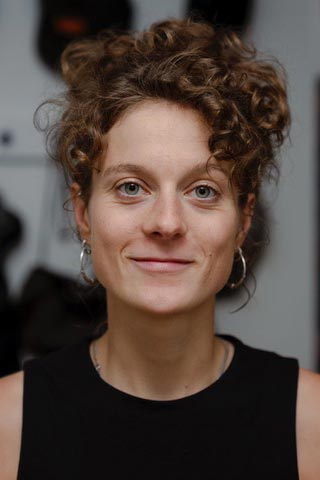
LOUISE MARLÈNE WOHLGEMUTH
MA Student in Restoration and Conservation, Bern Academy of the Arts
An Examination of Taeuber-Arp’s Polychrome Reliefs
Despite the art historical recognition of Sophie Taeuber-Arp, conservators have conducted few technical analyses of her reliefs. My master’s thesis research in conservation and restoration at the Bern Academy of Arts will begin to fill this gap. It will offer the first systematic examination and comparison of four reliefs by Sophie Taeuber-Arp.
This project focuses on two pairs of reliefs similar in both form and technique. Relief en bois peint (1938, Kunstmuseum Bern) will be compared to Relief (1936, Emanuel-Hoffmann-Stiftung, Basel) and Coquilles. Relief rectangulaire en deux hauteurs (1938, Kunstmuseum Bern) will be compared to Coquilles. Relief rectangulaire (1938, Fondazione Marguerite Arp, Locarno).
The physical properties of the reliefs will be documented using a range of imaging techniques, including VIS, UV, raking illumination, infrared reflectography (IRR), and X-rays. Meanwhile, a material analysis based on microsamples and cross-sections will include fourier transform infrared spectroscopy (FTIR), scanning electron microscopy (SEM), energy dispersive X-ray spectroscopy (EDS), and Raman spectroscopy. Among other things, the construction, mounting, and coatings will be analyzed to identify potential indications of later changes and reworkings.
By understanding the materials and craftsmanship as well as the artistic intention, I hope to gain new insights into the originality and authenticity of the reliefs that can be applied to other works by the artist in this genre. Another key aspect is the systematic documentation of each work’s genesis using a customized rubric, so later reworkings can be dated and classified as precisely as possible. The findings will be evaluated and contextualized by comparing the reliefs that make up the pairs and then by analyzing the pairs in relation to each other. Finally, the reliefs will be compared to paintings by the artist that have already undergone technical analysis as part of the Bern Academy of the Arts research project “Sophie Taeuber-Arp: Material and Technique between Tradition and Innovation.”
Through the technical analysis of these pairs of reliefs, this project aims to shed light on Sophie Taeuber-Arp working methods for these objects. In this way, my master’s thesis will contribute to wider efforts to better understand her oeuvre through the lens of art conservation and restoration.